What Is Agarwood Resin Grain? How to Read It on 108 Beads
What agarwood resin grain is, how to spot it on and inside the beads, and how it differs between standard, aged, select and Toc Kien grades.

When choosing a 108-bead agarwood bracelet, you'll often hear about "resin grain" (oil veins). What is it, how do you spot it on each bead, and why does it matter? A simple explanation with real photos.
What is agarwood resin grain?
Resin grain is the dark brown lines and spots on and inside agarwood. It is agarwood resin that has built up in the wood fibers over time, appearing darker than the surrounding wood with a distinctive streaked or "leopard" pattern.
The resin is also what gives agarwood its scent, so the grain is one of the signs to look at when choosing a bracelet.
How to see resin grain on 108 beads
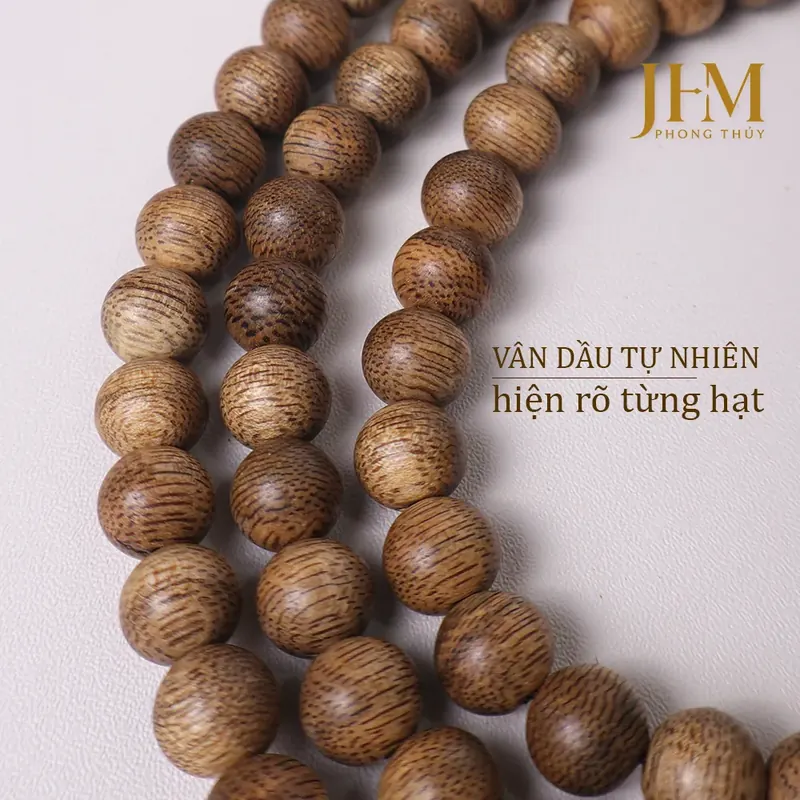
- Dark lines and spots spread naturally – never perfectly uniform like print.
- Every bead differs: denser or lighter grain, different shades of brown.
- Grain follows the wood fiber as you turn the bead.
- A smooth, slightly glossy surface develops over time with wear.
Resin inside the bead
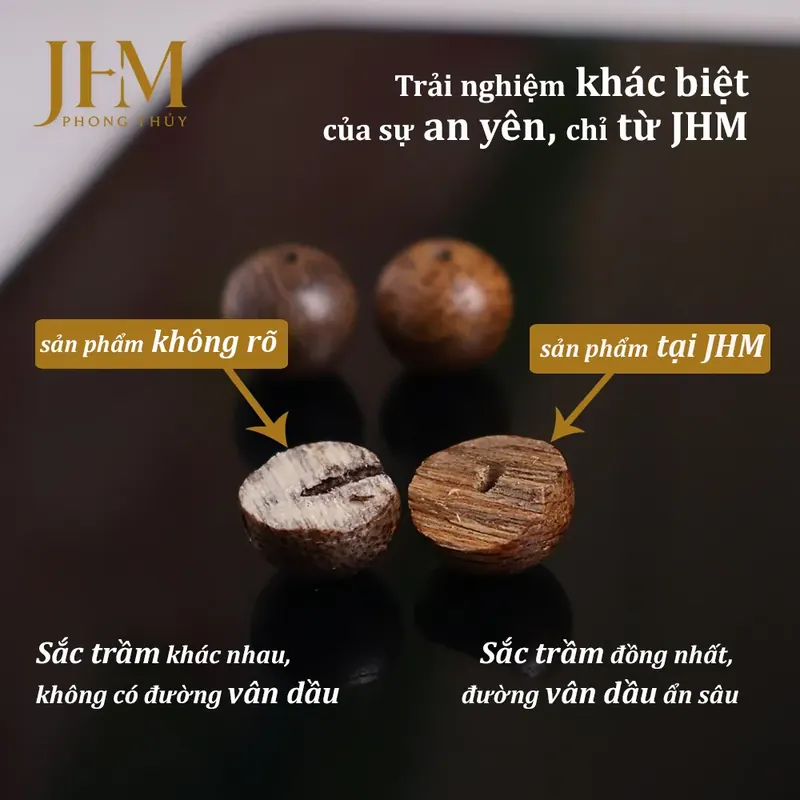
Resin also sits inside the bead. The cross-section below compares two beads: one with uneven color and almost no resin lines, and a JHM bead with even color and resin lines deep inside.
Learn more in how to tell natural agarwood from chemically treated wood.
Resin grain by grade
| Grade | Resin grain | Scent |
|---|---|---|
| Standard | Light grain, lighter wood | Soft and gentle |
| Aged | Clearer grain, darker brown | Richer |
| Select | Aged stock, clear grain, round beads | Rich aged scent |
| Toc Kien | Characteristic Toc Kien grain | Distinctive sweet scent |
Does the grain change over time?
With regular wear the beads gradually develop a natural sheen and may deepen in color – a process many collectors love. Keep it dry and away from chemicals; see care guide.
Video close-up
FAQ
Does more resin grain mean better agarwood?
It's one indicator, but consider scent, stock and craftsmanship too. Dark color alone isn't enough – dyed wood can look dark.
Why don't all beads match in color?
Resin is spread naturally, and each bead comes from a different part of the wood – a natural characteristic.
Will water fade the grain?
Water and soap can dry out and dull the beads, so remove it around water.